
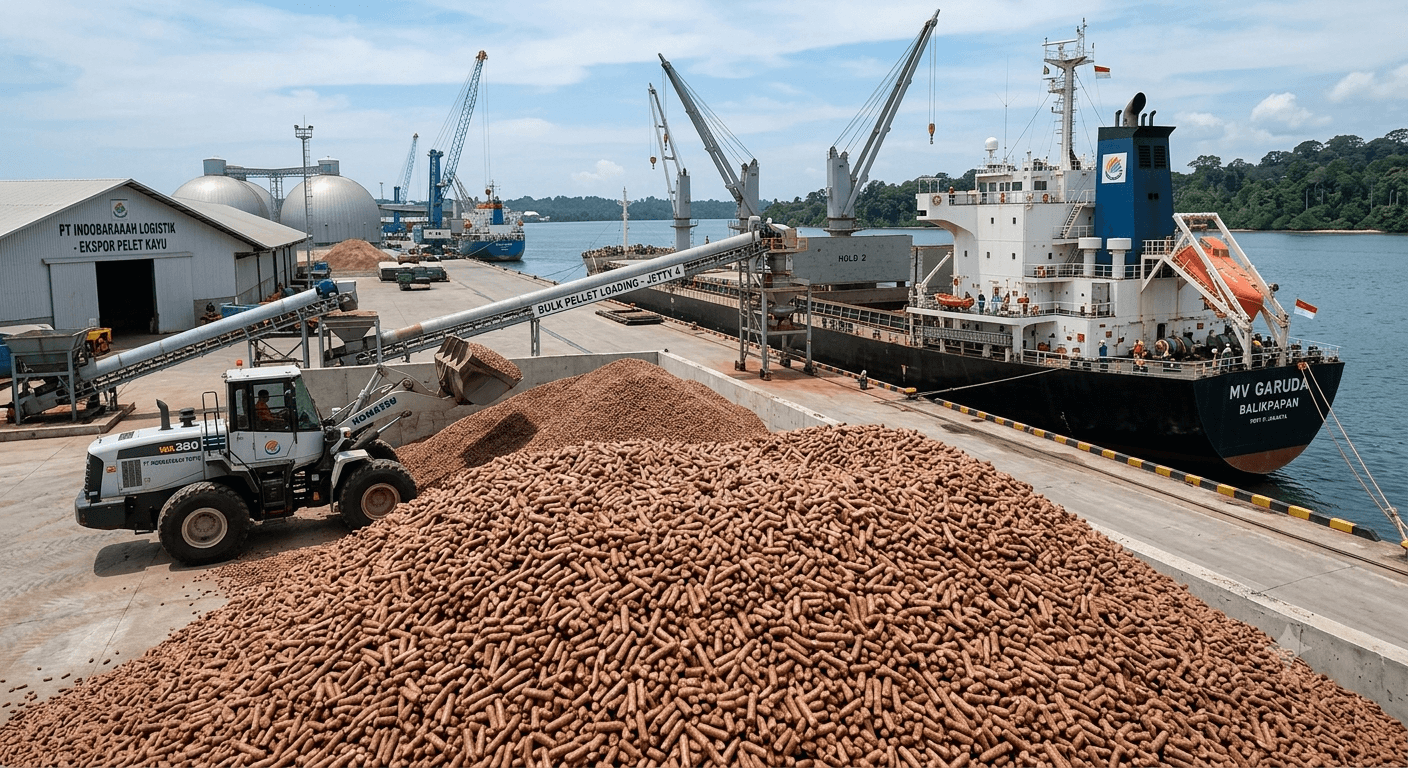
Japan’s biomass industry continues to expand as the country increases its use of renewable energy. Since domestic biomass resources cannot fully meet demand, imported wood pellets have become an essential part of the fuel supply.
Indonesia is gaining recognition as a reliable sourcing destination. With abundant plantation resources, growing production capacity, and a strategic location in Southeast Asia, the country offers several advantages for Japanese buyers. Even so, experienced importers know that selecting a supplier involves much more than comparing prices.
What Are Wood Pellets?
Wood pellets are compressed biomass fuel produced from sawdust, wood shavings, sawmill residues, plantation wood, and other forestry by-products.
The raw material is dried before being compressed under high pressure into dense, uniform pellets without significant chemical additives.
Because of their high energy density, wood pellets are more efficient to transport than loose biomass, making them a practical fuel for industrial biomass power generation.
Quality Specifications Buyers Should Consider
Consistent quality is critical for stable boiler performance and lower maintenance requirements. For that reason, Japanese buyers pay close attention to technical specifications when evaluating suppliers.
Typical industrial wood pellet specifications include:
- Diameter: 6–8 mm
- Moisture content: 10% or lower
- Ash content: generally below 1.5% for industrial grades
- Bulk density: at least 600 kg/m³
- High mechanical durability to reduce dust during handling
- Net calorific value of approximately 16.5 MJ/kg or higher
Meeting these specifications is important, but maintaining the same quality across every shipment is equally valuable for long-term supply relationships.
Indonesia’s Growing Role in the Japanese Market
Indonesia offers several strengths as a wood pellet supplier.
Its plantation forestry resources, wood processing residues, and expanding biomass manufacturing sector provide a solid production base. In addition, its proximity to Japan supports competitive shipping routes compared with suppliers located farther away.
Common feedstocks include sengon, acacia, eucalyptus, sawmill residues, and plantation by-products.
As regional demand grows, Indonesia continues to increase exports to markets such as Japan and South Korea.
What Japanese Importers Look For
When assessing suppliers, Japanese buyers generally focus on four key areas.
Product quality
Importers expect consistent moisture levels, low ash content, high calorific value, minimal dust, and strong mechanical durability.
Reliable supply
Steady monthly production capacity, dependable delivery schedules, well-connected export ports, and sound inventory management all contribute to a reliable supply partnership.
Complete documentation
Export shipments commonly include:
- Commercial Invoice
- Packing List
- Bill of Lading
- Certificate of Origin, where applicable
- Laboratory quality analysis
- Sustainability documentation
- Phytosanitary documents when required
Sustainability and traceability
Many Japanese buyers place increasing emphasis on legally sourced raw materials, plantation-based feedstock, and supply chains that can be clearly traced.
Standards and Certifications
Compliance with legal and quality standards is an important part of international biomass trade.
Indonesia’s SVLK (Timber Legality Assurance System) helps verify that exported timber products originate from legal sources.
International certifications commonly requested by buyers include:
- FSC
- PEFC
- SBP
- ISO 17225-2 for solid biofuel quality classification
Japanese buyers may also refer to the Japan Wood Pellet Association (JPA) quality standards, which classify pellets based on characteristics such as dimensions, moisture content, ash content, and bulk density.
When referring to Japanese standards, exporters should distinguish between JPA quality standards and the broader Japanese Industrial Standards (JIS), since commercial wood pellet specifications are more commonly based on JPA and ISO classifications.
Building Long-Term Export Opportunities
Price is only one part of the purchasing decision.
For biomass importers, long-term value comes from consistent product quality, dependable supply, legal sourcing, and internationally recognized certifications. These factors help reduce operational risk and build confidence between buyers and suppliers.
As Japan continues investing in biomass energy, Indonesian exporters that maintain reliable quality, transparent sourcing, and consistent supply are well positioned to strengthen their presence in one of Asia’s most important biomass markets.